



Key Takeaways
- Business storage units can help small businesses manage inventory, equipment, records, and seasonal stock.
- The right unit size depends on inventory volume, product dimensions, shelving, and access needs.
- Self-storage can be useful when you need additional storage but aren’t ready for a warehouse.
- E-commerce sellers can use organized storage for inventory and shipping supplies.
- Contractors can use dedicated storage for tools, materials, and equipment.
- Always check facility rules and local requirements before using a storage unit for business-related activities.
As a small business grows, so does everything around it. Inventory starts filling the office, tools take over the garage, and seasonal products have nowhere to go.
A warehouse may seem like the obvious next step, but not every business needs that much space. Business storage units can provide a practical middle ground for inventory, equipment, records, supplies, and other business belongings.
Quick Answer:
Yes. Business storage units can be useful for storing inventory, equipment, seasonal merchandise, records, and supplies. They can give a growing business dedicated storage space without requiring a full warehouse, but permitted uses vary by facility and local regulations.
Why Do Small Businesses Use Storage Units?
The main reason businesses turn to business storage is simple: they need more space.
A storage unit can help move items that are not needed every day out of an active office, home workspace, vehicle, or garage. This creates more usable space without requiring an immediate commitment to a larger commercial property.
According to Future Market Insights, small and medium-sized businesses (SMEs) accounted for about 58% of the business storage units market in 2025. This highlights the role storage can play for businesses that need additional space as they grow.
Common uses include:
- Product inventory and back stock.
- Shipping and packaging supplies.
- Contractor tools, materials, and equipment.
- Seasonal retail merchandise.
- Business records and archived documents.
- Office furniture and equipment.
- Promotional displays and event materials.
- E-commerce inventory and customer returns.
For a home-based business, a storage unit for business use can also keep inventory, supplies, and equipment separate from everyday living space. For growing businesses, it can provide additional storage capacity without requiring a larger office or warehouse right away.
What Can You Store in Business Storage Units?
Different businesses have different storage requirements.
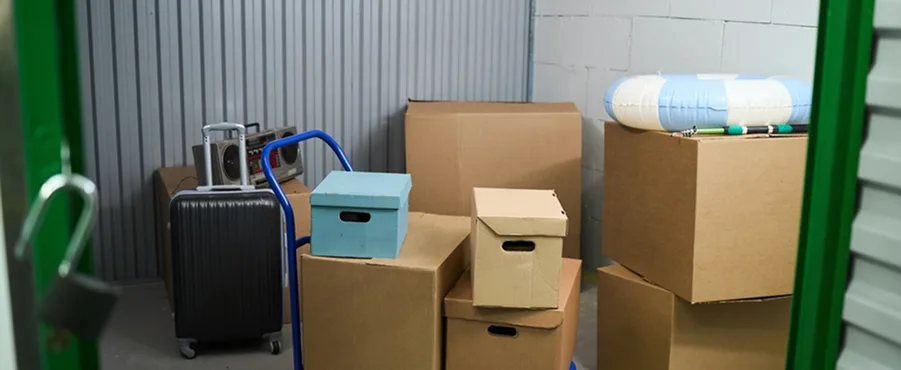
Retailers may need space for seasonal merchandise and excess stock. Contractors may need room for tools, materials, and equipment between projects. Online sellers may need a dedicated location for products and shipping supplies.
Businesses may also use office storage units for archived files, furniture, supplies, or equipment that isn’t needed every day.
The key is to choose a unit based on what you actually need to store and how frequently you need to access it.
Top Storage Units for Small Businesses
There isn’t one ideal size for every business. The right option depends on your inventory volume, product dimensions, shelving, and available access space.
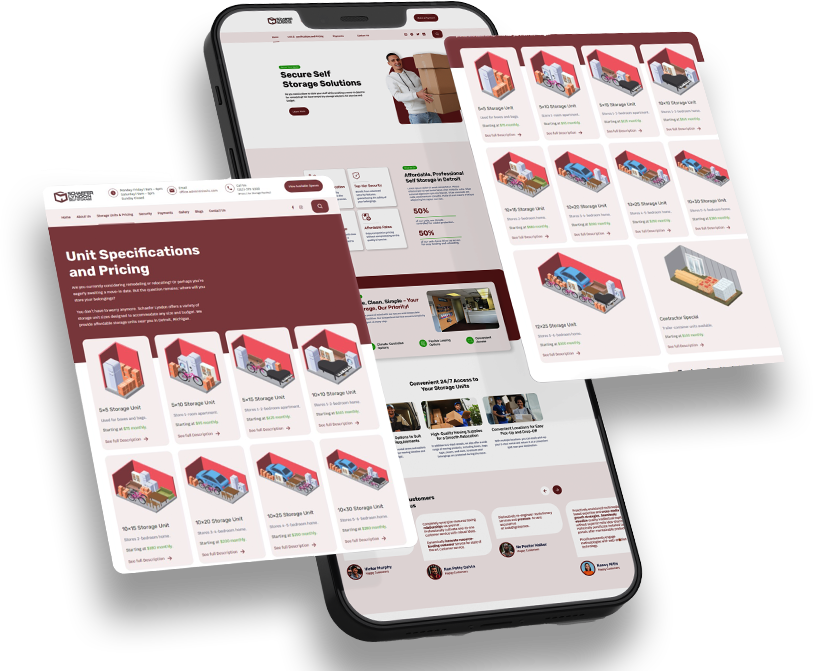
Schaefer Lyndon Self Storage (SLSS) currently lists the 5×10 at $105/month, 10×10 at $175, 10×15 at $190, 10×20 at $210, and 10×25 at $260 for regular units. Climate-controlled versions are listed at $10 more per month for these sizes. Rates can change, so confirm current pricing before reserving.
How to Choose the Right Storage Unit Size for Your Online Store
Don’t base your decision only on today’s inventory.
Consider:
- Current inventory volume.
- Expected business growth.
- Product dimensions.
- Packaging materials.
- Shelving requirements.
- Space needed to access products.
A little extra room can make an organized unit much easier to use. However, renting substantially more space than you need can add unnecessary monthly costs.
Warehouses vs. Commercial Storage Units: Which Is Better?
A warehouse and commercial storage units serve different purposes.
A warehouse may be more appropriate for businesses that need substantial operational space, frequent freight activity, employees working onsite, manufacturing, or large-scale fulfilment.
Self-storage can be a better fit when the primary requirement is simply additional storage space.
The choice should depend on your operation, not just the amount of space available.
For a small business that needs overflow storage but isn’t ready for a warehouse, affordable business storage can be a practical option.
Important for Detroit Businesses
A storage unit should not automatically be treated as a replacement for a commercial workspace.
Detroit’s zoning code states that retail, wholesale, fabrication, manufacturing, and service activities cannot be conducted from within public storage units. Check your rental agreement and applicable local requirements before using a unit for anything beyond permitted storage.
Self-Storage for E-Commerce Businesses
E-commerce sellers have an ongoing inventory challenge: products need to be stored somewhere accessible without allowing stock to overwhelm the primary workspace.
The U.S. e-commerce market is also substantial. According to the U.S. Census Bureau, U.S. retail e-commerce sales were estimated at $1,233.7 billion in 2025, an increase of 5.4% from 2024, and accounted for 16.4% of total U.S. retail sales.
As online businesses grow, they may need additional room for inventory, packaging supplies, returns, and seasonal products. Storage for e-commerce sellers can provide that extra space without requiring a full warehouse.
Creating a Mini Warehouse for Your Online Store
A storage unit can serve as an organized inventory location, but it isn’t automatically a warehouse or fulfilment center.
Create simple zones for:
- Best-selling products.
- Slow-moving inventory.
- Returns.
- Packaging supplies.
- Seasonal stock.
Use labelled shelves, consistent SKU names, and a digital inventory record. Current Shopify guidance also emphasizes location-level inventory tracking and accurate stock data to reduce stockouts and overselling.

GOT STUFF? WE'VE GOT SPACE!
Click here to discover our unit sizes, costs, and unique features designed perfectly for your storage needs.
How to Organize Inventory in a Storage Unit for Fast Shipping
Good organization can make a storage unit much easier to use.
1. Keep fast-moving products near the entrance. This reduces unnecessary searching.
2. Create product zones. Group similar products together by category or SKU.
3. Use vertical space. Shelving can increase usable storage without blocking walkways.
4. Label every box. Make labels visible and consistent.
5. Track locations digitally. Record the shelf, section, or box where each product is stored.
6. Keep walkways clear. Usable access is more valuable than filling every available inch.
A consistent system can support better ecommerce productivity with a well-organized storage unit, especially when orders are handled manually.
Storage for Contractors and Equipment
Contractors often need space for tools, materials, and job-site equipment between projects. A dedicated unit can keep equipment organized instead of filling a vehicle, garage, or primary workspace.
Scale Your Business with Contractor Storage Units
Contractors can organize equipment by project, trade, or frequency of use.
Keep frequently used tools accessible and maintain an inventory list so you can quickly identify what is available before heading to a job.
Storage for Seasonal Retail Stock and Business Records
Retailers don’t always need the same amount of space throughout the year.
Storage for seasonal retail stock can help separate holiday merchandise, promotional displays, event supplies, and off-season products from everyday inventory.
For businesses that need long term business storage, consider how frequently you’ll need access before choosing the unit and layout.
Businesses may also need storage for document and record keeping. The IRS says record-retention periods depend on what a document supports, so businesses should follow the applicable requirements rather than assuming every record has the same retention period.
For paper records, use labelled containers, keep documents off the floor, and maintain a digital index of stored boxes.
Long-Term vs. Short-Term Storage
Short-term storage can make sense for:
- Seasonal inventory.
- Temporary office transitions.
- Renovations.
- Events.
- Short-term inventory overflow.
Long-term storage may be more useful for:
- Archived records.
- Equipment.
- Seasonal business assets.
- Inventory that moves slowly.
The key question is how often you’ll need to access what you’re storing.
Climate-Controlled vs. Standard Storage
Standard storage may be suitable for many durable goods, tools, equipment, and properly packed inventory.
Climate-controlled storage can be worth considering for items that may be more sensitive to temperature or humidity changes, including certain electronics, paper records, furniture, or other sensitive materials.
Choose based on the items you’re storing rather than assuming every business need climate control.
Schaefer Lyndon Self Storage (SLSS) currently offers both regular and climate-controlled pricing across multiple unit sizes.
Business Storage Units at Schaefer Lyndon Self Storage
For Detroit businesses comparing business storage solutions, Schaefer Lyndon Self Storage offers multiple unit sizes, including 5×10, 10×10, 10×15, 10×20, and 10×25 options. It also offers a dedicated Contractor Special for equipment storage.
Security features listed by SLSS include 24/7 surveillance cameras, controlled access gates, individual unit alarms, well-lit premises, and onsite management.
For a business owner, the goal is to choose the space that fits the operation today while leaving room for practical growth.
GOT STUFF? WE'VE GOT SPACE!
Click here to discover our unit sizes, costs, and unique features designed perfectly for your storage needs.
Conclusion
The right business storage units can give a growing business additional room without requiring a warehouse before it’s necessary.
Whether you need space for e-commerce inventory, seasonal retail stock, contractor equipment, or business records, start with what you need to store and how often you’ll access it.
For Detroit businesses, Schaefer Lyndon Self Storage offers multiple unit sizes and a dedicated contractor option, making it possible to choose a storage setup based on your current needs and budget.
Frequently Asked Questions
How much does self-storage cost per month?
Prices vary by unit size, location, features, and climate control. Check the facility’s current rates before renting.
Can I use a storage unit for my business?
Yes. You can typically store inventory, equipment, supplies, seasonal merchandise, and records. Check the facility’s rental agreement for restrictions.
What do I need to rent a storage unit?
Most facilities require identification, a rental agreement, payment for move-in costs, and any required insurance or coverage.
What size storage unit does a small business need?
It depends on your inventory, equipment, shelving, and access needs. Common options include 5×10, 10×10, 10×15, and 10×20 units.
How do I reserve a storage unit online?
Compare unit sizes, prices, features, and terms on the facility’s website. Choose a unit and complete the online reservation if available.
What should I look for when choosing the best self-storage company for my small business?
Look at the factors that affect how you will use the space, including unit sizes, pricing, access hours, security features, climate-control options, rental terms, and location. A facility that fits your storage needs and budget may be a better choice than one selected based only on price.