



Key Takeaways
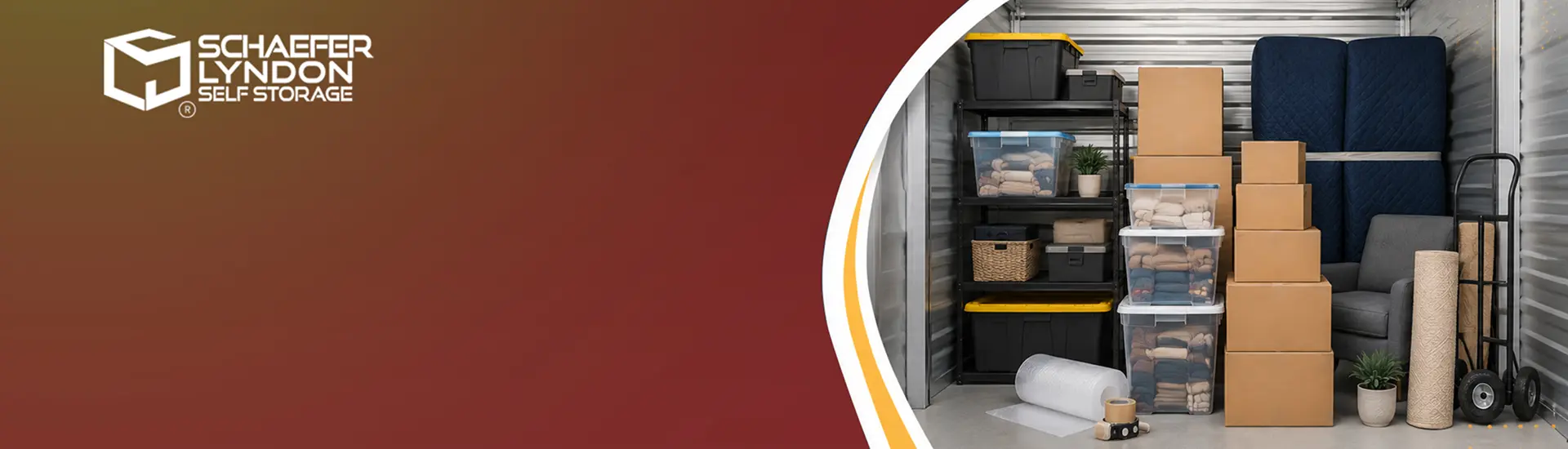
- Choose the right unit size and use sturdy packing supplies.
- Stack boxes from heavy to light and place large furniture along the walls.
- Leave a central walkway for quick, easy access.
- Clean and dry all items to prevent mold and odors.
AI Overview
This practical guide by Schaefer Lyndon Self Storage explains how to maximize space and protect belongings by utilizing vertical stacking, leaving central walkways, and preparing items properly to avoid mold.
Packing a storage unit might seem as simple as moving boxes from your vehicle into an empty space. However, a little planning can make a huge difference in how well your belongings stay protected and how easy they are to access later.
If you’ve been wondering how to pack a self storage unit, the answer comes down to choosing the right layout, using proper packing materials, and making the most of every inch of space.
In this guide, we’ll walk through practical storage unit packing tips, from preparing your belongings before moving them in to arranging everything safely inside the unit. You’ll also learn which common mistakes to avoid and how choosing the right storage facility can make the entire process much easier.
Before You Pack Your Self Storage Unit
A little preparation goes a long way when you’re packing a storage unit. Instead of loading everything as quickly as possible, spend some time planning your approach. Doing so can help prevent damage, make unpacking easier, and save you from renting more space than you need.
Choose the Right Self Storage Unit Size
The first step is selecting a unit that comfortably fits your belongings. Many people ask, “What size storage unit do I need before renting”. The answer depends on the number of items you’re storing, the size of your furniture, and whether you’ll need space to access your belongings later.
A unit that’s too small can lead to overcrowding, while one that’s too large may leave you paying for unused space.
If you’re using self storage for moving or relocation, think beyond what you own today. Leave enough room to move around inside the unit if you need to access items before everything is moved out.
Make a Packing Plan
Next, create a simple plan before you start packing. Group similar items together, decide what you’ll need first, and label boxes based on their contents or the room they belong to.
Moreover, making a checklist can help you stay organized throughout the move. If you’re wondering how self storage helps during moving or relocation, this is one of the biggest advantages. A well-planned storage unit keeps your belongings organized while giving you extra flexibility during the moving process.
Gather the Right Packing Supplies
Using the right supplies can prevent unnecessary damage later. While it may be tempting to reuse old boxes, sturdy materials offer much better protection.
Consider gathering:
- Strong cardboard boxes or plastic storage bins.
- Packing tape.
- Bubble wrap and pack paper.
- Furniture blankets or moving pads.
- Mattress covers.
- Stretch wrap.
- Permanent markers and labels.
Quality packing materials may cost a little more upfront. However, they often save money by reducing the risk of damaged belongings.
Prepare Your Items for Storage
Finally, take a few minutes to prepare everything before it goes into storage. Clean furniture, appliances, and household items to remove dust, moisture, and food residue that could lead to odors or mildew over time.
It’s also a good idea to disassemble large furniture whenever possible. Keep screws, bolts, and small hardware in labeled bags, then tape them securely to the matching item, so they’re easy to find later. Once everything is cleaned, protected, and ready to go, you’ll be set to pack your storage unit efficiently.
How to Pack a Self Storage Unit Step-by-Step
Now that everything is packed and ready, it’s time to arrange your belongings inside the unit. The best way to pack a storage unit is to think about both protection and accessibility. Instead of filling every available inch without a plan, create a layout that keeps your items safe while making future visits much easier.
Start with Large and Heavy Items
Begin by moving your largest and heaviest belongings into the unit first. Place items like sofas, dressers, bookcases, and sturdy appliances at the back to create a solid foundation for everything else.
Disassemble bulky furniture whenever possible to save room. Additionally, keep table legs, screws, and hardware together in labeled bags, so reassembly is simple later. This approach is one of the most effective answers to how to pack a self storage unit without creating unnecessary clutter.
Place Furniture Along the Walls
Once the larger items are inside, position furniture around the perimeter of the storage unit. Keeping the center open gives you more flexibility as you continue loading boxes.
Once the larger items are inside, position furniture around the perimeter of the storage unit. Keeping the center open gives you more flexibility as you continue loading boxes.
Knowing how to store furniture in a storage unit can help prevent damage while making the most of your available space. Whenever possible, store couches upright if the manufacturer recommends it, avoid placing excessive weight on delicate furniture, and cover everything with moving blankets or furniture covers to protect surfaces from dust and scratches.
Stack Boxes from Heavy to Light
Next, arrange your boxes by weight. Heavy boxes should always form the base, while lighter and more delicate boxes belong on top.
For better organization:
- Stack boxes of similar sizes together.
- Keep labels facing outward.
- Avoid building stacks that lean.
- Leave fragile boxes off the very bottom.
Following these simple self storage packing tips reduces the chance of crushed boxes and damaged belongings.
Use Vertical Space Without Overloading
One of the smartest ways to maximize storage unit space is to build upward instead of spreading everything across the floor. However, avoid creating towers that become unstable.
Use shelves if available or carefully stack sturdy boxes while keeping the heaviest weight at the bottom. A balanced layout allows you to store more without increasing the risk of items falling over.
Leave a Walkway for Easy Access
It may seem like a wasted space, but leaving a narrow walkway can save a lot of time later. Instead of unpacking half the unit to find one box, you’ll be able to reach your belongings much more easily.
This is also an effective way to organize a storage unit, especially if you plan to visit it several times throughout the year. Even a small aisle down the center can make a noticeable difference.
Keep Frequently Used Items Near the Front
Think about what you’ll need first before loading the unit. Seasonal decorations, important documents, tools, or sports equipment should stay close to the entrance instead of being buried behind heavy furniture.
This simple habit makes future visits quicker and helps maintain an organized layout over time. Moreover, it’s another practical example of smart storage unit packing tips that many people overlook.
Store Fragile Items Safely
Take extra care when you protect fragile items in storage units. Wrap glassware, mirrors, artwork, and decorative pieces individually using bubble wrap or packing paper, then clearly label each box as “Fragile.”
Avoid placing heavy items on top of these boxes, even if they appear sturdy.
Protect Mattresses, Appliances, and Electronics
Always use protective covers for mattresses, and clean appliances thoroughly before storing them. Leave the refrigerator and freezer doors slightly open to prevent odors from developing over time.
For electronics and sensitive belongings, climate-controlled storage is often worth considering because it helps reduce exposure to extreme temperatures and humidity. Likewise, if you need to store clothes in a storage unit without damage or mold, breathable garment bags and clean, dry containers are your best options.
Common Self Storage Packing Mistakes to Avoid
Even with the best intentions, a few simple mistakes can make your storage unit harder to use and increase the risk of damage. Fortunately, they’re easy to avoid with a little planning.
Using Weak or Damaged Boxes
Old or damaged boxes can collapse under weight, putting everything inside at risk. Instead, choose sturdy boxes or durable plastic bins that can handle stacking.
Overpacking Boxes
It might seem like fewer boxes will save space, but overfilled boxes are difficult to carry and more likely to break. Keep the weight manageable so it’s easier to lift and stack safely.
Blocking Access to Important Items
Avoid filling every inch of the unit without thinking ahead. Keep items you’ll need throughout the year near the front and maintain a small walkway whenever possible.
Storing Damp or Dirty Belongings
Always clean and dry furniture, clothing, and appliances before placing them in storage. Even a small amount of moisture can lead to unpleasant odors, mildew, or mold over time.
Forgetting to Label Boxes
A simple label can save you from opening multiple boxes just to find one item. Mark each box with its contents and destination room to stay organized from day one.

GOT STUFF? WE'VE GOT SPACE!
Click here to discover our unit sizes, costs, and unique features designed perfectly for your storage needs.
Find the Right Self Storage Unit for Your Needs
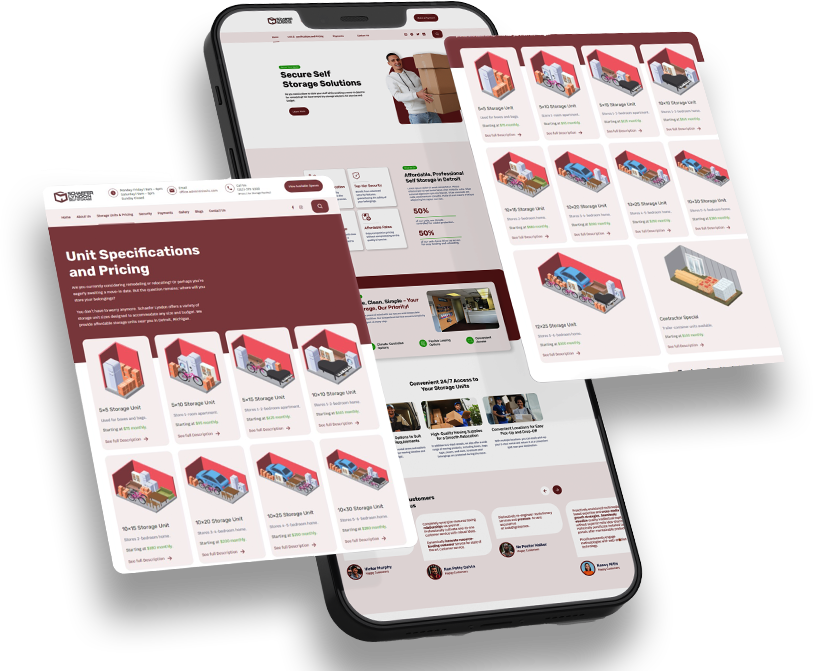
Packing your belongings properly is only part of the process. Choosing a storage unit that matches your needs is just as important. Whether you’re storing household furniture during a move, making room during a renovation, or creating extra space at home, selecting the right unit size helps you stay organized and avoid paying for more space than necessary.
The U.S. self-storage industry provides more than 2 billion square feet of rentable storage space, reflecting the growing need for flexible storage solutions.
So, if you’re still wondering how to pack a self storage unit, remember that the right unit, combined with a smart packing strategy, makes storing your belongings much simpler.
Why Choose Schaefer Lyndon Self Storage?
A common question customers ask is, how safe are storage units? the answer depends on the facility you choose. Features like gated access, surveillance cameras, well-lit premises, and secure locks help keep your belongings protected throughout the storage period.
At Schaefer Lyndon Self Storage, you’ll find clean, secure, and convenient storage solutions designed for both short-term and long-term needs. With a variety of unit sizes, helpful staff, and easy access to your belongings, it’s easier to store everything with confidence.
Whether you’re moving, decluttering, or simply need extra room, having access to reliable storage can make staying organized much easier. Choosing a facility with the right unit sizes, convenient access, and dependable security helps ensure your belongings remain protected for as long as you need to store them.
GOT STUFF? WE'VE GOT SPACE!
Click here to discover our unit sizes, costs, and unique features designed perfectly for your storage needs.
Conclusion
Learning how to pack a self storage unit is really about planning ahead and staying organized. Taking the time to choose the right packing materials, arrange items carefully, and avoid common mistakes can help protect your belongings while making them much easier to access later.
Even if you’re storing items for a few weeks or much longer, a well-packed storage unit can save you time, reduce stress, and make better use of the available space whenever you need it.
Frequently Asked Questions
What is the best way to pack a self storage unit?
Place large items along the walls, keep a central walkway open, and store frequently used belongings near the front entrance.
How do I maximize space in a self storage unit?
Stack sturdy boxes vertically from heavy to light, disassemble bulky furniture, and carefully utilize all available vertical wall space.
Should heavy boxes go to the bottom?
Yes, always place heavy boxes at the bottom of stacks to create a stable base and prevent crushing fragile items.
Can I stack boxes to the ceiling?
Avoid stacking completely to the ceiling, as unstable towers can collapse; instead, use balanced, secure layers or sturdy shelving.
What should I store near the front of a self storage unit?
Keep seasonal decorations, tools, important documents, and any frequently accessed belongings right near the entrance for quick, easy retrieval.
Are plastic bins better than cardboard boxes?
Durable plastic bins offer superior protection against moisture and collapse, making them much better than weak cardboard boxes for stacking.