



Key takeaways
- Packing from the back wall forward can help you use depth, height, and floor space without creating clutter.
- Grouping items by size, weight, and use can help you find things later without pulling everything out.
- Using boxes, labels, shelves, and clear walkways can make a storage unit easier to access over time.
- Placing heavy items low and fragile items high can help prevent damage while saving space.
- Matching your packing plan to the unit size can help you avoid wasted room and last-minute reshuffling.
The best way to learn how to pack a storage unit is to start with a plan before moving anything inside. Place heavy items at the back and bottom, stack boxes by size, keep fragile items protected, and leave a clear walkway for access.
Use labels, shelves, and a simple inventory list so you can find items later. Smart packing helps you save space, protect belongings, and avoid a messy unit.
Ever opened a storage unit and felt like everything inside had formed one big, stubborn wall? Boxes sit wherever they fit, furniture blocks the back, and the one thing you need is somehow buried behind everything else. That is usually what happens when packing starts without a real plan.
Learning how to pack a storage unit is not about forcing more items into less space. It is about making the space work smarter, so your belongings stay safe and easy to reach.
In this guide, we will cover planning, unit size, loading order, box stacking, labels, safety, and access. Before move-in day, it helps to start with the part most people skip: the plan.
Start with a plan before you move anything in
Most storage problems begin before the first box crosses the door. A rushed load can waste space, hide important items, and leave fragile pieces in the wrong place. A little planning up front helps you avoid digging through stacks later.
What should you sort before packing a storage unit?
Before you decide how to pack a storage unit, sort everything by use and risk. Keep frequently needed items in one group, long-term items in another, and fragile pieces separate from heavy goods.
Each of the following should have its own rough category:
- Seasonal décor
- Family keepsakes
- Tools
- Business supplies
- Furniture
If you expect to visit often, plan for easier access near the front. That is also the simplest answer to how to organize a storage unit without making it feel overplanned.
Once you know what goes where, unit size becomes much easier to judge.
Match your packing plan to the right unit size
Undeniably, choosing the wrong unit size can make the whole packing process harder than it needs to be. Too small, and you end up forcing boxes into corners, stacking too high, or blocking access. Too large, and you pay for space that stays empty. The right unit size keeps moving, decluttering, or business storage far more manageable.
How do different unit sizes affect your packing plan?
When learning how to pack a storage unit, size should guide your layout from the start.
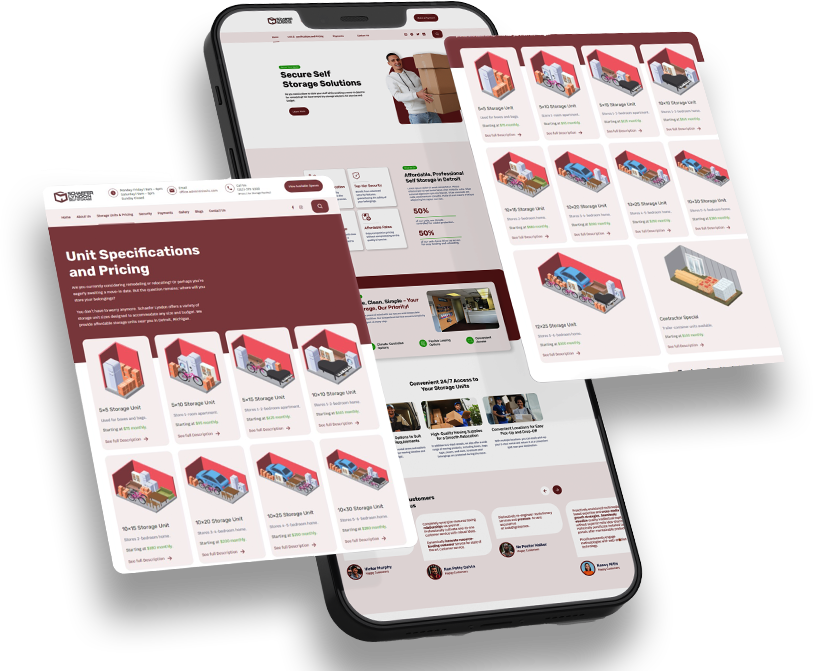
- A 5×5 storage unit works well for small boxes, seasonal items, personal goods, and a few compact pieces.
- A 5×10 storage unit gives you more room for bins, small furniture, and apartment overflow.
- A 5×15 storage unit adds useful length for longer items, small room contents, or mixed loads.
| Unit Size | Best For | Packing Tip |
|---|---|---|
| 5×5 | Boxes, décor, small items | Stack same-size boxes neatly |
| 5×10 | Small furniture and bins | Keep often-used items near the front |
| 5×15 | Longer items and mixed loads | Use the depth, but leave a walkway |

GOT STUFF? WE'VE GOT SPACE!
Click here to discover our unit sizes, costs, and unique features designed perfectly for your storage needs.
Load heavy items first and build from the back
The first few items you place inside set the tone for the whole unit. If heavy pieces land in the wrong spot, everything after that becomes harder to stack, reach, or protect.
What is the best loading order for a storage unit?
Start with the largest and heaviest items. Place furniture, appliances, and heavy bins against the back or side walls to create a stable base. Keep weight low, avoid stacking heavy boxes on fragile items, and stand tall furniture upright when safe. When deciding how to pack a storage unit, keep anything you may need soon near the front.
Use boxes, shelves, and vertical space wisely
Floor space runs out quickly when everything sits low, loose, or half-packed. That is why vertical space matters, but only when weight and safety stay in balance. The goal is not to stack as high as possible. The goal is to build stable layers that make sense.
How do you stack boxes without crushing things?
When learning how to pack a storage unit, start with strong, same-size boxes whenever you can. Fill each box fully so the sides do not cave in, but avoid making them too heavy to lift safely. Seal boxes well and place the heaviest ones at the bottom.
Moreover, shelving helps with tools, files, décor, small business inventory, and delicate items that should not be buried. Soft bags can fill gaps, but they should not hold fragile items.
At this point, it is fair to state that when you are learning how to pack a self storage unit, boxes and shelves do half the work for you. After that, labels and inventory keep everything easy to find.
Label everything and create a simple inventory
Few things are more annoying than knowing an item is somewhere in storage but having no idea where to start looking. It usually happens after the move, when boxes that felt “obvious” during packing all start looking the same. A simple label system saves you from that guessing game.
How do labels help you find items later?
To organize storage unit contents properly, label more than one side of every box. Use room names, item groups, and color tags if that helps your eye catch things faster. For example, “Kitchen, glassware” works better than “Box 4.”
If you want to know how to set up inventory, keep a phone note or spreadsheet with box numbers and short contents. Clear labels make storage easier to live with. They also help when you start packing fragile or odd-shaped items that need extra care.
Protect fragile, awkward, and valuable items
Odd-shaped items can eat up space fast because they do not stack neatly. Fragile items need even more care because one bad placement can turn a simple storage job into a costly mistake. For families, that might mean protecting keepsakes and décor. For small business owners, it might mean keeping product samples, displays, or equipment safe.
How should fragile items be placed inside a unit?
When deciding how to pack a storage unit, treat fragile pieces as their own category and follow a few simple precautions to reduce the risk of damage:
- Wrap glass, dishes, lamps, electronics, collectibles, and picture frames with soft padding before placing them in storage.
- Store mirrors and artwork upright rather than flat, so pressure does not build across the surface.
- Keep padding between pieces that may rub together, especially metal, wood, or framed items.
- Never place heavy boxes on fragile items, even if there appears to be extra space available.
Wood, fabric, and paper items also need protection from moisture, so keep them off the floor and away from damp corners. For added guidance, you can review basic moisture and mold prevention tips from the EPA.
Keep an access path and front-zone system
Packing a unit wall-to-wall may look smart at first, but it can become frustrating fast. The moment you need one box from the back, all that “saved space” turns into extra work. A simple access path keeps the unit useful, not just full.
What should stay near the front of the unit?
Keep tools, documents, seasonal items, business supplies, and anything you may need within the next month near the front. Leave a center aisle or side path so you can step in safely and reach visible labels. When you organize a storage unit this way, the space stays easier to use over time.
A good layout helps, but the right facility makes packing even easier. That is where Schaefer Lyndon Self Storage can support the process from the start.
GOT STUFF? WE'VE GOT SPACE!
Click here to discover our unit sizes, costs, and unique features designed perfectly for your storage needs.
How Schaefer Lyndon Self Storage helps you pack smarter
A good packing plan works best when the unit itself matches your load. If the space is too tight, poorly placed, or hard to access, even a careful layout can become frustrating. That is why the facility matters almost as much as the packing method.
For Detroit residents, families, and local businesses, Schaefer Lyndon Self Storage offers unit size options that make planning easier from the start. Drive-up access helps with heavy furniture and large boxes, while climate-controlled options help protect items that do not handle heat or moisture well.
SLSS can also help you choose a unit based on what you are storing, so you do not guess your way through move-in day.
Before closing, let’s answer a few common packing questions people often search for.
Conclusion
Learning how to pack a storage unit comes down to planning before you load, choosing the right storage unit size, and placing heavy items first. From there, smart stacking, clear labels, vertical space, and an open access path keep your unit useful instead of frustrating.
If you want help choosing the right fit, contact Schaefer Lyndon Self Storage. Our team can guide you through unit sizes, local rates, and packing-friendly options for home, family, or business storage.
Frequently Asked Questions
What is the best way to pack a storage unit?
The best way to pack a storage unit is to load from back to front, keep heavy items low, label boxes, and leave a clear access path.
How do I pack a self storage unit for long-term use?
Use sturdy boxes, breathable covers, climate care when needed, clear labels, and a walkway.
Should I leave space inside my storage unit?
Yes. A small aisle helps you reach items safely without unloading everything.
How do I keep boxes from collapsing in storage?
Use strong boxes, fill empty gaps, keep heavy boxes at the bottom, and avoid stacking too high.