


Key Takeaways:
- Use high-quality materials to provide the best protection for your items.
- Wrap all delicate objects individually to prevent any direct surface contact.
- Place the heaviest boxes at the bottom to maintain a balanced stack.
- Choose climate control to avoid damage from shifting temperatures and humidity.
You pack everything carefully, drive to your storage unit, stack the boxes, and lock the door. Then, weeks later, you open it to find a shattered vase or a cracked picture frame at the bottom of a crushed box. It is a familiar, frustrating moment.
Here is the thing: protecting fragile items in storage units is not about luck. It comes down to the right packing materials, smart placement, and choosing a storage environment that works for delicate belongings. In this guide, you will find practical steps to keep your valuables safe, whether you are storing glassware, antiques, electronics, or artwork.
Why Fragile Items Need More Than Just a Box?
Most people assume putting something in a box is enough. For sturdy items, it probably is. However, for fragile things, a box alone offers very little real protection.
Storage units go through temperature changes, humidity shifts, and occasional vibrations from nearby activity. Over time, those conditions add up. A poorly packed ceramic might survive a move but crack three months into storage simply because it was resting against a harder surface.
Moreover, stacking is a bigger problem than most people expect. A heavy box placed on top of a lightly packed one can compress it enough to damage whatever is inside. So before thinking about placement, getting the packing right is the first priority.
Choosing the Right Packing Materials: What Actually Works?
Not all packing materials are created equal, and using the wrong ones can cause as much damage as not packing at all. Here is a quick reference:
| Material | Best Used For | Avoid Using For |
|---|---|---|
| Bubble Wrap | Glass, ceramics, fragile surfaces | Items needing air circulation |
| Packing Paper | Wrapping individual items, filling box gaps | Items needing rigid support |
| Foam Sheets | Electronics, flat surfaces, added cushioning | Very heavy or sharp items |
| Packing Peanuts | Filling empty space around wrapped items | Replacing wrapping entirely |
| Newspaper | Filler only (not touching the item directly) | Light-colored items (ink transfers) |
Does Bubble Wrap Really Make a Difference?
It does, but only when used correctly. Wrap each item individually with the bubble side facing inward, against the object. Smooth side out. Secure it with tape so it stays in place during handling.
For extra-fragile items like wine glasses or ceramic figurines, double-boxing is worth the extra effort. Wrap the item, box it with padding, then place that box inside a larger one with cushioning around it. It feels excessive until you open everything six months later and find it intact.
What To Skip Entirely:
- Newspaper directly on items (ink stains and transfers)
- Thin plastic bags (trap moisture, offer zero cushioning)
- Overpacked boxes (too much weight weakens the structure)
- Underpacked boxes (empty space lets items shift and collide)
How to Pack Fragile Items So They Survive Long-Term Storage?
Good packing is about more than bubble wrap and hope. The way you build a box matters just as much as what you put inside it.
Rules that actually make a difference:
- Wrap individually: Even similar items like glasses will clink and break if touching.
- Weight distribution: Place heavy items at the bottom and lighter ones on top to prevent crushing.
- Fill all gaps: Use packing paper or peanuts to stop items from shifting during transit.
- Cushion the base: Add a few inches of padding at the bottom to absorb impacts.
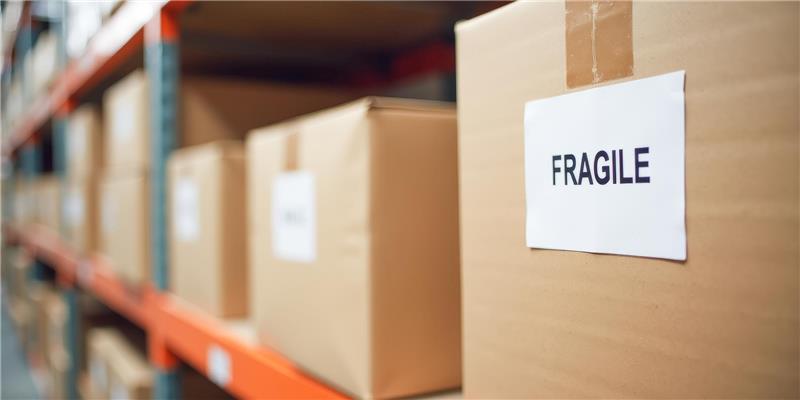
- Label clearly: Mark “FRAGILE” and “THIS SIDE UP” on at least three sides of the box.
What About Oddly Shaped or Oversized Items?
Mirrors and framed artwork need mirror boxes, which are available at most moving supply stores and sized specifically for flat, fragile items. For artwork, foam corner protectors and padded moving blankets work well together.
Lamps should be disassembled. Wrap shades separately in packing paper, remove bulbs entirely, and box the base with padding around it.
For truly irreplaceable pieces, such as antique sculptures or high-value collectibles, custom crating is worth considering. It costs more upfront but eliminates most of the risk.
Fragile Item Packing Reference Guide
| Item Type | Recommended Packing | Special Consideration |
|---|---|---|
| Glassware & China | Bubble wrap + packing paper, individual boxes | Never stack; mark FRAGILE on all sides |
| Artwork & Mirrors | Mirror boxes, foam corners, padded blankets | Store upright, never flat |
| Electronics | Original boxes preferred; foam inserts | Climate-controlled unit strongly recommended |
| Antiques & Collectibles | Archival tissue, acid-free wrapping, custom crates | Avoid humidity and floor contact |
| Musical Instruments | Hard cases, humidity packs inside | Temperature swings cause warping and cracking |
| Lamps & Light Fixtures | Bubble wrap shades separately, padded boxes | Detach bulbs; protect shades from pressure |
Placement Inside the Storage Unit: Where You Put Things Matters
You can pack everything perfectly and still run into problems if placement inside the unit is an afterthought. In fact, this is where a lot of fragile items get damaged even after being packed well.
Placement tips worth following:
- Always place fragile boxes at the top of a stack to prevent crushing, regardless of how well they are packed.
- Keep items away from walls to avoid contact with potential moisture or condensation.
- Maintain a clear aisle through the unit so you can access the back without knocking over belongings.
- Use shelving units to elevate boxes off the floor and protect them from minor flooding or spills.
- Group all delicate items in a single designated area to ensure heavy objects aren’t accidentally placed nearby.
Is It Safe to Stack Boxes in a Storage Unit?
Yes, but only with care. Heavy boxes form the base. Medium weight in the middle. Fragile, lightweight boxes on top. If a box is labeled FRAGILE, it should never have anything resting on it, regardless of how sturdy it looks.
Climate-Controlled Storage: Is It Worth It for Fragile Items?
For most everyday items, a standard storage unit works fine. However, for fragile belongings, the answer is almost always yes; climate control is worth it.
Here is why. Temperature swings cause materials to expand and contract repeatedly. Over months, that stress causes cracking in ceramics, warping in wood, and deterioration in electronics. Humidity adds another layer of risk, leading to mold, mildew, rust, and staining.
Temperature and humidity swings alone can ruin up to 40% of sensitive stored items like electronics, paper, and artwork over time.
Items that genuinely benefit from climate-controlled storage:
- Antiques and fine furniture
- Artwork and framed photographs
- Electronics and musical instruments
- Fine china, glassware, and crystal
- Vinyl records, books, and documents
- Wine and other temperature-sensitive collectibles
On the other hand, if you are storing general household items or things you are not particularly attached to, a standard unit may be all you need. It is really about weighing the value of what you are storing against the cost difference.
How Schaefer Lyndon Self-Storage Helps You Store with Confidence?
We understand that putting your belongings into storage, especially fragile or valuable ones, is not a small decision. At Schaefer Lyndon Self-Storage, we offer a range of storage unit sizes and options in Detroit, Michigan, designed to fit different needs and different types of belongings.
Whether you need a climate-controlled unit for antiques and electronics or a larger space for furniture and household items, we can help you find the right fit. Our facilities are clean, secure, and accessible, because the condition of your storage space is just as important as how you pack.
If you are ready to find a unit or have questions about what option works best for what you are storing, contact us right now. We are happy to help you figure it out.
The Bottom Line
Ultimately, protecting your valuables is about combining the right materials with a thoughtful layout. By wrapping items individually, labeling boxes clearly, and prioritizing climate control, you eliminate the risks that lead to heartbreak later.
A little extra preparation before locking the door ensures your belongings remain in the same condition as the day you stored them. If you are ever unsure about which environment is best for your specific items, professional guidance is always available to help you make an informed choice for long-term peace of mind.
Frequently Asked Questions
What are the most common hidden fees in storage unit rentals?
Common hidden costs include administrative fees, mandatory locks, insurance premiums, and price increases following introductory rate periods
Is insurance required for a self-storage unit?
Yes, most facilities mandate proof of insurance, requiring either a qualified homeowners policy or the purchase of a facility protection plan.
How do I determine the storage unit size I need?
What extra costs should I budget for besides monthly rent?
What additional costs should I budget for besides monthly rent?
Factor in moving supplies like boxes and tape, as well as the cost of a truck rental or professional movers to transport your items.